


Q&A: Mark Bulman on His Grenache Obsession and the Fight for Australian Fine Wine
Few Australian winemakers speak about Grenache with such conviction and precision as Mark Bulman does. Known for his early-picked, tightly structured, site-driven expressions, Mark has become a leading voice in redefining what Australian Grenache can be.
In this conversation with Indigo Marketing Manager, Nancy Green, he speaks candidly about the architectural beauty of tannin, the impact of climate volatility, and why Australian fine wine is still fighting to be taken seriously.
I think of it like a flower unfurling: the earliest stage is the most intricate and unique; full bloom is simpler… I’m trying to bottle that early, delicate, three-dimensional shape of the vineyard.
Part 1: The Passion for Grenache
Q: Grenache has shifted from being seen as a plush and fruit-driven wine to something finer and more architectural. How would you define structure in Grenache today?
Mark: For me, structure in Grenache comes from grape-derived tannin – tannin that reflects the vineyard itself. Because Grenache is grown in warm places, it’s always had this reputation for plush, sun-soaked wines. And this format of Grenache can be very joyful and crowd pleasing. But if you want delicacy, site expression, and real shape, you must focus on tannin as the vehicle for architecture – not ripeness, not generosity, but the vineyard’s own textural bones.
Q: What originally drew you to Grenache?
Mark: My experience was previously in cool-climate Chardonnay and Pinot. When I moved to the Barossa, everyone was obsessed with Shiraz, but Grenache was the variety that I felt was the best translator of site to bottle. Even in rosé ferments, each block told its own clear story. I realised Grenache could translate place with the same nuance I loved in Pinot – so I followed that thread.
Q: How do you approach harvest timing for Grenache? What are the key cues you rely on?
Mark: So this is the method that I’ve developed over the last 15 years. Grenache gives its most intricate tannin early. I pick at the moment the greenness disappears from the berry before flavour kicks in. It’s a tiny window, almost counterintuitive, but it’s when the tannin shape is most distinct to the site. The wines look lean young but they tend to blossom much more brightly than anything that’s a bit riper.
Q: How do soil and sub-region affect the tannin and acid profile?
Mark: Hugely. Grenache is so disease prone that you need a warmer, dryer area to grow properly. Then soil steps in: the richer the soils, the less likely that the tannins will be prominent. The more skeletal the soils are, the harder the vines have to work hardworking sites give the strongest structural identity. The harsher the environment, the clearer the tannin signature.
Q: With climate warming, how has this affected your picking windows and fruit balance?
Mark: Since about 2015 onwards, the swings have become dramatic. Either bone-dry, early vintages with tight windows, or late, wet vintages with extended windows. I prefer the cooler years; they give me more grace to hit that perfect moment before flavour arrives. The picking window is super tight in the hot, dry years because obviously you’ve got a plant that’s trying to produce a fruit with some sweetness, with very limited resources and with a lot of heat bearing down on it. So that compacts very much that sort of zone where I find the best expression is.
Q: I really notice with your wines that they are very distinctive profiles according to either their vintage or their site. They really speak of a time or a place.
Mark: Absolutely. And I think that works into what fine wine should be. I always say, a good wine or a fine wine should speak first of the site, then of the maker and then of the vintage.
Q: Site or winemaking: which matters more for Grenache?
Mark: Site. My winemaking is simple – early pick, antioxidative handling, long soaks. And so that’s actually quite replicable. It’s just that not many other people are doing it that way. Rule #1 is get your site right. A great site made poorly will still look good; the reverse is rarely true.
Q: Grenache can lose shape if over-extracted. How do you balance gentle handling with textual depth?
Mark: Loss of shape comes from ripeness and oxidation. So I pick early and keep oxygen away entirely. Oxidation denatures tannin, it’s not “bad,” but it blurs site. And Grenache is the opposite of Shiraz: where Shiraz thrives on oxygen, Grenache loses detail.
Q: How do you conceptualise tannin as “architecture”? What gives Grenache its scaffolding?
Mark: Tannin is shape, not flavour. It’s a feeling as opposed to a taste. I’ve used this metaphor a few times, but I think of it like a flower unfurling: the earliest stage is the most intricate and unique; full bloom is simpler. At this stage it’s very immediate and bright and it draws you in, but it’s simpler in terms of the layers and the shape. I’m trying to bottle that early, delicate, three-dimensional shape of the vineyard.
Q: Do you see a uniquely Australian style of Grenache emerging?
Mark: Absolutely. We’ve combined old vineyards with a culture of competitive, technically excellent winemaking. Tradition isn’t weighing us down like it does in parts of the Rhône. We’ve pushed forward and found our own dialect, distinct, energetic, and site-specific.
Q: How should sommeliers talk about your wines?
Mark: Don’t lead with the word Grenache. And definitely not “Australian Grenache.” Pour it blind for Pinot and Nebbiolo drinkers — people who appreciate texture, shape, nuance. Let them discover what it is after they’ve fallen in love with it.
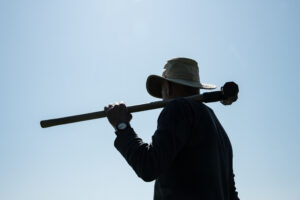
Grower Gary Whaite of Gary’s Vineyard
Part 2: The Challenge of Australian Fine Wine
Q: How do you define “fine wine” in the Australian context?
Mark: Traditionally, Australia has equated price with richness: the more you pay, the bigger the wine. That’s not fine wine to me. Fine wine should tell an accurate story of site — and still be joyful to drink. For decades we prioritised ripeness, clinical winemaking, and clear labelling. It made Australian wine safe, consistent, and very successful – but in this we sacrificed nuance and terroir.
Q: Has the oversupply crisis hurt Australia’s fine-wine ambitions?
Mark: Definitely. Overproduction always cheapens perception. Australia boomed on clean, affordable wine, which cheapened our image and the world still sees us that way. Now we must rebuild the idea that Australia can make wines of site, delicacy, and identity.
Q: What hurdles remain when presenting Australian fine wine to sommeliers and buyers?
Mark: There are plenty of hurdles here. The biggest hurdle is comparison. In blind tastings against European wines, Australian wine often shines really well. But I feel that’s just putting us up someone else’s yardstick.
I think what we need to do, and what Grenache can do, is find an individuality and the uniqueness that only exists in Australia. We’re trying to get out of those hurdles. It’s almost like we don’t want to get too desperate in proving ourselves. We almost want to push the hurdles aside and go don’t worry about the hurdles. Come over here and just see. Just have a taste of this and tell me what’s going through your head and what you’re aligned to.
Q: What would success look like for Australian fine wine in 10 years?
Mark: I noticed in London – where I ate and dined pretty well – so many lists were just absent of Australian wines. Many were totally European centric. I’d love to see Australian wines make up around 5% of great wine lists in the UK. Just a handful of a few really thoughtful and well-chosen bottles.
Q: What message should sommeliers share when pouring your wines?
Mark: I suppose just to relax preconceptions. Try to dismiss what you think Grenache is and then what you think Australian Grenache can be. Let it take you somewhere. If the wine sparks memories or emotions, then great. Then go to the photos and the vineyard descriptions and see why it tastes that way and let that lead you to the place.
Mark’s 2024 release of Gary and Glen’s Vineyard are due to arrive in the UK imminently. Please get in touch with us for more information.
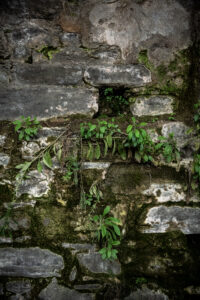
The maidenhair fern found in the stone garden of Glen’s Vineyard