

Our Blog
Q&A: Mark Bulman on His Grenache Obsession and the Fight for Australian Fine Wine
Q&A: Mark Bulman on His Grenache Obsession and the Fight for Australian Fine Wine
Few Australian winemakers speak about Grenache with such conviction and precision as Mark Bulman does. Known for his early-picked, tightly structured, site-driven expressions, Mark has become a leading voice in redefining what Australian Grenache can be.
In this conversation with Indigo Marketing Manager, Nancy Green, he speaks candidly about the architectural beauty of tannin, the impact of climate volatility, and why Australian fine wine is still fighting to be taken seriously.
I think of it like a flower unfurling: the earliest stage is the most intricate and unique; full bloom is simpler… I’m trying to bottle that early, delicate, three-dimensional shape of the vineyard.
Part 1: The Passion for Grenache
Q: Grenache has shifted from being seen as a plush and fruit-driven wine to something finer and more architectural. How would you define structure in Grenache today?
Mark: For me, structure in Grenache comes from grape-derived tannin – tannin that reflects the vineyard itself. Because Grenache is grown in warm places, it’s always had this reputation for plush, sun-soaked wines. And this format of Grenache can be very joyful and crowd pleasing. But if you want delicacy, site expression, and real shape, you must focus on tannin as the vehicle for architecture – not ripeness, not generosity, but the vineyard’s own textural bones.
Q: What originally drew you to Grenache?
Mark: My experience was previously in cool-climate Chardonnay and Pinot. When I moved to the Barossa, everyone was obsessed with Shiraz, but Grenache was the variety that I felt was the best translator of site to bottle. Even in rosé ferments, each block told its own clear story. I realised Grenache could translate place with the same nuance I loved in Pinot – so I followed that thread.
Q: How do you approach harvest timing for Grenache? What are the key cues you rely on?
Mark: So this is the method that I’ve developed over the last 15 years. Grenache gives its most intricate tannin early. I pick at the moment the greenness disappears from the berry before flavour kicks in. It’s a tiny window, almost counterintuitive, but it’s when the tannin shape is most distinct to the site. The wines look lean young but they tend to blossom much more brightly than anything that’s a bit riper.
Q: How do soil and sub-region affect the tannin and acid profile?
Mark: Hugely. Grenache is so disease prone that you need a warmer, dryer area to grow properly. Then soil steps in: the richer the soils, the less likely that the tannins will be prominent. The more skeletal the soils are, the harder the vines have to work hardworking sites give the strongest structural identity. The harsher the environment, the clearer the tannin signature.
Q: With climate warming, how has this affected your picking windows and fruit balance?
Mark: Since about 2015 onwards, the swings have become dramatic. Either bone-dry, early vintages with tight windows, or late, wet vintages with extended windows. I prefer the cooler years; they give me more grace to hit that perfect moment before flavour arrives. The picking window is super tight in the hot, dry years because obviously you’ve got a plant that’s trying to produce a fruit with some sweetness, with very limited resources and with a lot of heat bearing down on it. So that compacts very much that sort of zone where I find the best expression is.
Q: I really notice with your wines that they are very distinctive profiles according to either their vintage or their site. They really speak of a time or a place.
Mark: Absolutely. And I think that works into what fine wine should be. I always say, a good wine or a fine wine should speak first of the site, then of the maker and then of the vintage.
Q: Site or winemaking: which matters more for Grenache?
Mark: Site. My winemaking is simple – early pick, antioxidative handling, long soaks. And so that’s actually quite replicable. It’s just that not many other people are doing it that way. Rule #1 is get your site right. A great site made poorly will still look good; the reverse is rarely true.
Q: Grenache can lose shape if over-extracted. How do you balance gentle handling with textual depth?
Mark: Loss of shape comes from ripeness and oxidation. So I pick early and keep oxygen away entirely. Oxidation denatures tannin, it’s not “bad,” but it blurs site. And Grenache is the opposite of Shiraz: where Shiraz thrives on oxygen, Grenache loses detail.
Q: How do you conceptualise tannin as “architecture”? What gives Grenache its scaffolding?
Mark: Tannin is shape, not flavour. It’s a feeling as opposed to a taste. I’ve used this metaphor a few times, but I think of it like a flower unfurling: the earliest stage is the most intricate and unique; full bloom is simpler. At this stage it’s very immediate and bright and it draws you in, but it’s simpler in terms of the layers and the shape. I’m trying to bottle that early, delicate, three-dimensional shape of the vineyard.
Q: Do you see a uniquely Australian style of Grenache emerging?
Mark: Absolutely. We’ve combined old vineyards with a culture of competitive, technically excellent winemaking. Tradition isn’t weighing us down like it does in parts of the Rhône. We’ve pushed forward and found our own dialect, distinct, energetic, and site-specific.
Q: How should sommeliers talk about your wines?
Mark: Don’t lead with the word Grenache. And definitely not “Australian Grenache.” Pour it blind for Pinot and Nebbiolo drinkers — people who appreciate texture, shape, nuance. Let them discover what it is after they’ve fallen in love with it.
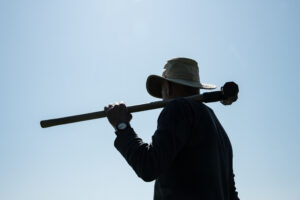
Grower Gary Whaite of Gary’s Vineyard
Part 2: The Challenge of Australian Fine Wine
Q: How do you define “fine wine” in the Australian context?
Mark: Traditionally, Australia has equated price with richness: the more you pay, the bigger the wine. That’s not fine wine to me. Fine wine should tell an accurate story of site — and still be joyful to drink. For decades we prioritised ripeness, clinical winemaking, and clear labelling. It made Australian wine safe, consistent, and very successful – but in this we sacrificed nuance and terroir.
Q: Has the oversupply crisis hurt Australia’s fine-wine ambitions?
Mark: Definitely. Overproduction always cheapens perception. Australia boomed on clean, affordable wine, which cheapened our image and the world still sees us that way. Now we must rebuild the idea that Australia can make wines of site, delicacy, and identity.
Q: What hurdles remain when presenting Australian fine wine to sommeliers and buyers?
Mark: There are plenty of hurdles here. The biggest hurdle is comparison. In blind tastings against European wines, Australian wine often shines really well. But I feel that’s just putting us up someone else’s yardstick.
I think what we need to do, and what Grenache can do, is find an individuality and the uniqueness that only exists in Australia. We’re trying to get out of those hurdles. It’s almost like we don’t want to get too desperate in proving ourselves. We almost want to push the hurdles aside and go don’t worry about the hurdles. Come over here and just see. Just have a taste of this and tell me what’s going through your head and what you’re aligned to.
Q: What would success look like for Australian fine wine in 10 years?
Mark: I noticed in London – where I ate and dined pretty well – so many lists were just absent of Australian wines. Many were totally European centric. I’d love to see Australian wines make up around 5% of great wine lists in the UK. Just a handful of a few really thoughtful and well-chosen bottles.
Q: What message should sommeliers share when pouring your wines?
Mark: I suppose just to relax preconceptions. Try to dismiss what you think Grenache is and then what you think Australian Grenache can be. Let it take you somewhere. If the wine sparks memories or emotions, then great. Then go to the photos and the vineyard descriptions and see why it tastes that way and let that lead you to the place.
Mark’s 2024 release of Gary and Glen’s Vineyard are due to arrive in the UK imminently. Please get in touch with us for more information.
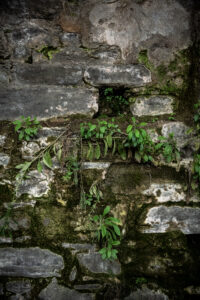
The maidenhair fern found in the stone garden of Glen’s Vineyard
Wines Rooted in the Earth: A Conversation with Alice Anderson of Âmevive
In the heart of Santa Barbara County, Alice Anderson is doing something quietly radical. As the winemaker and farmer behind Âmevive –a name that translates from French as “living soul” – Alice doesn’t just make wine. She cultivates an entire ecosystem.
We sat down with Alice to talk about her path into wine, what it means to nurture a historic vineyard, and how intention, animals, and native plants are part of the soul of her Âmevive project.
From Horses to Harvests
“I didn’t grow up in wine or anything,” Alice admits. “I grew up riding horses and raising animals. Agriculture always interested me, but it wasn’t part of my family background.” That changed when she enrolled at Cal Poly, one of California’s few universities offering a dedicated wine and viticulture degree. There, she met peers like Gina and Mikey of Lady of the Sunshine & Scar of the Sea—fellow Indigo producers, who, like Alice, are shaping the future of California wine. After graduation, Alice set off on a global journey that many young winemakers know well: a kind of “harvest hopping” that exposes them to vineyards around the world.
“It’s one of the beautiful things about wine – every winemaker is shaped by the places and people they’ve worked with. You have this really distinct lineage of people you’ve worked for.”
Her first transformative experience came at Rippon in Wanaka, New Zealand, where she worked a full pruning season. “It was the first time I spent every day in the vines, and it changed my life.” That hands-on farming experience led her to France, where she spent two years working at Domaine Pierre Gaillard. Despite her love of French culture and French wine, something pulled her back to home: “As a mid-twenties single girl living in a stone hut in the middle of nowhere, I wasn’t quite ready for that level of isolation.” So she returned to California – and found her home in Santa Barbara County.
The Soul of Âmevive: Ibarra-Young Vineyard
At the heart of Âmevive is a singular piece of land: the Ibarra-Young Vineyard. Planted in 1971 by Charlotte Young, it remains in her family today – leased and lovingly farmed by Alice and her small team. The vineyard has a storied history. In 1986, Bob Lindquist, one of the pioneering figures of the Santa Barbara wine scene, an original “Rhône Ranger” and founder of Qupé, began leasing and organically farming the land. “He transitioned everything to organic in 1993,” Alice told us. “So this land has been organic since before organic was cool.”
A Regenerative Revolution
Since taking over farming in 2019, Alice has gone far beyond organic. “We’ve become known for a more unconventional farming style,” she explains. “We’re fully no-till, fully regenerative, and fully integrated with animals.” That means rotational grazing with sheep, chickens and ducks. “It’s a full-time job raising animals in the vines,” she laughs, “but their presence plays a vital role.” Chickens and ducks help control pests. Sheep munch the cover crop, reducing the need for tractors. And their manure? Nature’s fertiliser. But the benefits go beyond the practical.
“There’s this energetic benefit [to raising animals]. The more intention you put into a place, the more time you spend walking your vineyard, the more it shows in the final wine. Especially when you’re making wines that are living – unfined, unfiltered.”
Restoring her Native Landscape
Beyond animals, Alice is on a mission to restore native ecology in the vineyards. “We want something blooming 365 days a year,” she explains. That means planting hedgerows and pollinator rows, inviting bees, butterflies, and beneficial insects back into the landscape.
“The hedgerow at Ibarra-Young is about three years old now, and it’s my pride and joy,” she beams. “It’s really well established and just beautiful. And we’ve got annual pollinator rows running the length of the vineyard too. Right now, with all the flowers blooming, it’s just beautiful.”
The Living Soul
Everything Alice does – from grazing sheep to planting wildflowers – is grounded in the belief that great wine is not just made; it’s grown, nurtured, and lived. Âmevive isn’t just a winery. It’s a living, breathing organism rooted in its place, and in the people who care for it.
The wines are a direct reflection of the land she nurtures, and here entire range has a brightness to them – a product of the Californian heat but also Alice’s playful, sunny nature.

Introducing Salt Éire to the Salt of the Earth Series: A Complex, Still Chardonnay from the Sugrues
The Salt of the Earth series is a passion project between three good friends; wine writer Jamie Goode, Zalto importer Daniel Primack, and Indigo’s very own Ben Henshaw. Discussing their mutual love of saline, terroir-driven whites, a lightbulb moment occurred over dinner one night in late 2017: their own barrel projects, exclusive to Indigo. A lengthy conversation proceeded to choose the right grape varieties on their pursuit. The brief was to settle on one that represented what they liked drinking themselves: a grape that clearly transmits its terroirs, and produces age-worthy, saline wines but at an accessible price point.
Following the success of their Albariño, Riesling, and Chenin Blanc, we can now introduce Salt Éire, a complex, multi-vintage, solera-aged Chardonnay from renowned English winemakers Dermot and Ana Sugrue. Salt Éire, (pronounced ‘air-uh’) is a nod to Dermot’s Irish heritage, and is the first-ever still English white we’ve had in our portfolio.

Salt Éire is made from 100% Chardonnay sourced from three of Dermot and Ana Sugrue’s Sussex vineyards: Mount Harry, Coldharbour, and Storrington Priory. The wine is a blend of different vintages, aged in a variety of vessels, from new small barriques to large old foudres, creating complexity and depth. A solera system is used for maturation, where a half-filled American heavy char barrel is used to top up the other barrels, further enriching the wine’s character. Individual barrels are then selected by Jamie, Ben and Daniel and blended once more before proudly sticking our own label on it.
“Salt Éire is a highly distinctive, multi-dimensional, solera-aged Chardonnay displaying nutty, creamy, citrus and savoury flavours with a flinty, herbal, salted-butter complexity following its long élevage in large and small barrels, old and new. Carefully controlled oxidation is balanced by a freshness and fine structure, with a long and intense finish, offering delicious drinking now, as well as serious potential for ageing.”
– Dermot Sugrue
Alongside Salt Éire, the Salt of the Earth range includes three other saline whites, each crafted by talented Indigo vignerons.
Sal da Terra: A maritime-influenced Albariño from Rías Baixas, Galicia, made in collaboration with Eulogio Pomares from the esteemed Zárate winery. This wine showcases the connection between coastally grown grapes and saline precision in the final wine.
Salz der Erde: A Riesling from the Rheingau in Germany, produced by Theresa Breuer of the top Georg Breuer estate. This wine offers a crisp, laser-cut profile with stony minerality and lemony acidity.
Soutbosch: A zesty, racy Chenin Blanc from Stellenbosch, South Africa, made by Bernhard Bredell of Scions of Sinai. The wine reflects the salty coastal influence of its False Bay vineyard, showcasing vibrant citrus and mineral notes.
Each wine in the collection is a tribute to the unique terroir where the grapes are grown, and the label artwork, created exclusively by artist Mariëtte Kotzé, emphasises the deep connection between these wines and their landscapes.
Get in touch with us to taste this collection of unique, energetic whites that are able to so clearly transmit their sense of place in the glass.
A trip to rediscover Rioja’s history and its villages
In September, the Indigo team, some customers and I travelled to Rioja to visit José Luis Ripa at his Ripa Rosado vineyards, my father Telmo at Remelluri, and the family-run winery, Bodegas Las Orcas. Rioja is one of the most historic winemaking regions in the world, and it is now experiencing one of the most exciting moments of the last 50 years as a new generation of winegrowers are shifting their focus back to the vineyards, the terroir, and creating wines that truly reflect the authentic Rioja.
On our first day, we met with José Luis Ripa at one of the vineyards used for Ripa Rosado. José Luis is a Rioja native and a passionate researcher of the history of the region. In 2010 he started working at Lopez de Heredia where he met his wife Maria José López de Heredia, a force of nature in the wine scene of la Rioja who is now leading her family winery. José Luis developed a passion for rosé during his Master of Wine studies and has now decided to venture into winemaking with this new project. In this vineyard planted in 1960, José Luis seeks to showcase a more complex and textural rosé. He invited us to his home in Ollauri were we tasted his wine and had a fantastic ‘aperitivo’ while discussing his project and the future of rosé in La Rioja. Later that day, we met Luis Dominguez from Remelluri at Beethoven, a classic restaurant in Haro, the winemaking capital of La Rioja. Accompanied by lamb chops, pimientos, and puerros, we tried the wines from the six villages that make up the Lindes project—a perfect setup for the following day.

We started Tuesday with breakfast in Haro’s main square before heading to Salinillas de Buradón, the most Atlantic of the Lindes villages. Salinillas was a very important village in the 13th century because of its strategic placement and above all its salt mines. Today the remnants of this past glory are its walls fortifying the village and its soils rich in quartz salts which gives a trademark minerality to its wines. Unlike the other villages, which are protected by the mountain range from Atlantic weather fronts, Salinillas is nestled in the Sierra de Cantabria, exposing the vineyards to a more Atlantic climate. Appropriately, it was the only place where we encountered rain!
Next, we travelled to San Vicente, a historically significant town from medieval times that guarded the crossing of the Ebro River. There, we met Alvaro, one of the “Linderos” dedicated to reviving the best viticultural practices. He took us to El Hoyo, a small vineyard with 120-year-old vines that his family has owned for five generations. Alvaro proudly gave us a tour before sharing some delicious tomatoes grown in the vineyard on the bonnet of his car! We also tasted Grandes Lindes de San Vicente Jesusa Areta, named in honour of his mother, who had taken care of his family’s vineyards before him.

We then met Jesús and his father, who walked us through their vineyards in Peciña, a small hamlet of San Vicente with only five inhabitants! Here, we stopped for lunch and tasted the Lindes de Peciña in the perfect setting— The Hermita de Santa Maria de la piscina overlooking San Vicente from the hills of Peciña. Afterward, we visited Ábalos and Rivas del Tereso, two historic villages in Rioja where winemaking has been practiced for over a thousand years. We ended the day in Labastida, where we met Íñigo, who took us to Fuente del Fraile (The Friar’s Fountain), a small vineyard he has been working to restore and bring back to its former glory. In the 17th century, Labastida boasted 330 registered winegrowers; today, only four winegrowers under the age of 30 remain. Íñigo (although just over 30 now) is one of them, fighting to preserve Labastida’s abandoned vineyards.
That evening, we visited the birthplace of this project: La Granja Nuestra Señora de Remelluri. Here we met up with my dad Telmo, my brother Mateo and my sister Maia. We had dinner, toured the winery, and tasted Remelluri Blanco straight from the barrel. During dinner, we sampled not only the wines of Remelluri but also some old Riojas, including a 1957 bottle of Royal. My father always enjoys returning to the older vintages of Rioja, a time pre-industrialization of winemaking where the vineyards and the places took centre stage. He has always taught us that a much more exciting Rioja can be rediscovered by exploring its past. As he often says, “The future of Rioja is the past.”

On our final day, we headed to Laguardia, a walled Medieval village, to visit another exciting project. In 1994, Raimundo and Cristina Abando founded Bodegas Las Orcas. Raimundo took the scenic route into winemaking, competing in international triathlons as a youngster, but caught the vinous bug later in life and became the third generation of his family to make wine. Today their daughter Lucía, having studied agronomy at university in Rioja and beyond, is taking the reigns in the winemaking, looking to improve their viticultural practices and working with a lighter touch in the new winery they moved into in 2022. Fermentation is now with wild yeasts, sulphur additions have decreased dramatically, and they have bought a number of alternative vessels like concrete tanks and cement eggs, looking to refine the winemaking. They own 10 hectares of grapes and are renting another 12 across nearby vineyards; Lucía explains that the Viura in their vines is planted at the top of their vineyard where there is more limestone, while the Tempranillo is at the bottom where there is more clay.

We then tasted Solar de Randez Barrel Aged Blanco 2023. It’s a single variety Viura from their oldest white grapes, 80-year-old bush vines on pure limestone from around 535 metres above sea level. The wine ferments in tank before spending four months in new French oak barrels. It was showing beautifully, full of ripe citrus oil and fresh pineapple with a gently creamy mid palate and a spicy finish, a lovely combination of body and restraint. It paired superbly with the delicious platters of local cheeses and cured meats we were presented with after, as we sat down to taste (and drink!) the wines with some food.
It is young winegrowers like Lucía that have the immense responsibility to redefine the future of Rioja, rediscovering our ancient winemaking techniques, adapting them when necessary but above all respecting our geographical heritage. It is extremely exciting to see and be a part of this movement, spreading the message of what we are trying to do and rediscovering so much which has been forgotten. After all, Rioja’s future lies in its past!
Visiting Adega de Vimbio: The Resilient Vignerons of Galicia
By Vanessa Ferguson, Account Manager
In the world of winemaking, some stories bloom from unexpected beginnings. Vimbio represents a journey that intertwines family, nature, and the art of winemaking. On a recent trip to the Galicia in July 2024, the Indigo team and a handful of customers met with vignerons Martin Crusat and Patricia Elola at their winery in Rías Baixas, where the focus is producing terroir-driven, single vineyard whites, from a blend of native varieties, while making a promise to preserve the land around them.
A serendipitous start
The tale of Vimbio began with Martin’s family, who purchased the vineyard property in 1985. In 2012 whilst living in Amsterdam, they were faced with lack of work in their specialist areas of biology and environmental science. So, Martin and Patricia decided to return to Galicia, ready to embrace their roots and make a go of things in the winemaking world.
By 2015, the family had established a winery on their 2.5-hectare estate, infusing insights from their environmental and biology background into sustainable grape growing and winemaking practices. The Vimbio vineyard (interestingly, meaning ‘willow’, a nod to the traditional Galician use of willow branches for trellising the vines) is situated at 60 meters altitude and cultivates a variety of grapes including Loureiro, Albariño, and Caíño Blanco, each contributing their own unique flavours to the wines.
Indigenous vines and heritage
Out in the vines, Martin gave us an insightful explanation of the indigenous varieties that they grow, and what each variety lends to the blend. Loureiro and Albariño are the cornerstones of Vimbio’s production. Loureiro is cherished for its aromatic bay leaf notes, Albariño for salinity and as the most expensive grape in Spain at £3 a kilo, it is a standout feature of their vineyard. Some of the vines, planted as early as 1985, are among the estate’s oldest. Caíño Blanco, Martin explained, contributes a lively acidity to their blends, ensuring a balanced and complex wine profile consistently year on year.
Navigating climatic challenges
The region’s maritime climate is both a blessing and a challenge for Vimbio. With abundant rain, late frosts, and soaring temperatures that reached up to 38°C on our trip, the vineyard faces significant hurdles. The high value of unplanted land in Rías Baixas also, underscores the area’s viticultural potential and the high stakes involved.
Despite facing challenges like fungal disease and climate change, the estate seems to adapt to the hand they have been given and thrives. They balance traditional methods with new innovations, managing crops organically and using strategic spraying to combat disease. In 2018 they lost most of their fruit due to mildew – even with Martin and Patricia’s microbiological knowledge – the threat of mildew each vintage is growing in severity as the fungus adapts and grows in resistance to the sprays which are used extensively by winemakers in this wet region.
Vimbio’s winery is adorned with a roof topped with plants designed to regulate air temperature, exemplifying their commitment to sustainability. They are also known for their extensive use of cover crops, promoting biodiversity in the vineyards and to work in partnership with nature. However, they also contend with the impact of poor pruning practices in the past, which can shorten a vine’s lifespan to just 25 years. Desiccation caused by pruning too close to the arm, highlights the importance of meticulous vineyard management.
Crafting exceptional wines
Producing only around 1500 bottles yearly, Vimbio prioritises quality over quantity in what is truly an artisan production. Martin explains the process from vineyard to bottle, telling us that all the fruit is harvested by hand, followed by a cool, gentle pressing to preserve aromatics before a spontaneous fermentation with wild yeasts in stainless steel tanks.
Martin & Patricia focus on low intervention wines with minimal sulphites, a topic they spoke passionately about at length during our visit. Their most recent harvest in 2023 of Loureiro and Albariño, harvested earlier than usual due to rising temperatures, in order to retain the grapes’ acidity and freshness, adapting to the ever changing climatic conditions.
Vimbio’s unique terroir, a mix of shale and clay soils, consistently yields ripe grapes and brings to the surface a sense of place when tasting the wines. Through meticulous vineyard management, Vimbio ensures high-quality harvests despite the threats and barriers they face.
Looking ahead
Vimbio is poised to continue producing exceptional wines while navigating the evolving challenges of climate change and viticultural practices. Their dedication to sustainability and quality places them as a notable producer in the region. The resulting wines speak for themselves : these are pure, vivid wines with bags of green fruit character. But they also have an alluring savory side to them of almonds and bay.
In essence, what I learned about Vimbio on this visit was that it is more than just a vineyard; it’s a story of family resilience, a profound connection to the land and the indomitable spirit of Galicia.


We’re fundraising to support our Chilean wineries affected by recent flooding and wildfires to replant and re-build.
During the three months leading up to Christmas Indigo will donate £1 for each bottle sold, from a selection of our favourite Chilean wines (full list below), to the go-fund-me campaigns mounted by Leo Erazo (Rogue Vine) and Jose-Luis and Daniela Gómez Bastías (Viña González Bastías) – who have both been severely affected by the recent fires and flooding in Itata and Maule.
Rogue Vine was founded by friends Leo Erazo and Justin Decker, to restore and bring recognition to the old bush vines on steep granitic hills that form part of the viticultural heritage of southern Chile. When wildfires swept through Itata in February, 90% of the vineyards which they farm were burned, many of the vines they lost were over 100 years old.
Assessing the damage in the days after the fires Leo observed: “Definitely there are some vineyards that won’t recover – the trunks have burnt literally to charcoal. I had a parcel of Moscatel planted in the 1870s that was next to the eucalyptus, and that will not recover. My guess is that from the 90% of production that we have lost, half of the vines will recover and half will need to be replanted”.

Jose-Luis and Daniela of González Bastías sustainably farm 4ha of very old vine Pais, Torontel, Moscatel and Semillon on the banks of the River Maule. On 21st August 150mm of rain fell in 24 hours, double the previous record of 84mm in 1963, swelling the river to record levels, engulfing their vineyards and destroying their winery and house. This short video shows their vineyards after the rain.
Daniela, ever a beacon of positivity, tells us that now the waters have receded they are beginning recovery work in the vineyards and rebuilding their home.
We’re hearing about the effects of climate change on the environment, wildlife and people increasingly frequently. In the last six months two incidents have hit particularly close to home as they impacted two wineries that we work with in Chile. In July Daniela and José Luis from Gonzalez Bastias travelled to London, the team and our customers were taken by their energy and commitment to their heritage vines.
Ben Henshaw, owner Indigo Wine
Fast-forward three months and floods in Maule destroyed their family home and winery, and inundated their vineyards. It isn’t the first climate disaster in central Chile this year. Leo Erazo of Rogue Vine faced wild fires that spread rapidly across the Itata region in February. As a team our hearts went out to Daniela, Jose-Luis and Leo, we felt we had to do something to help them to rebuild their lives and replant their vineyards.
If you would like to support or learn more about this campaign, please contact your sales rep. or jo@indigowine.com
Wines in the fundraiser:
Dominio del Cuarzo Itata Cinsault
Dominio del Cuarzo Itata Pais Ñipas
Gonzalez Bastias Pais Matorral
Gonzalez Bastias Tierra Madre
Liberame Pet Nat Blanco
Liberame Pet Nat Rosado
RETA Quebrada Chalinga Pinot Noir
RETA Romelio
RETA Quebrada Seca Chardonnay
Rogue Vine Grand Itata Blanco
Rogue Vine Grand Itata Tinto
Tinta Tinto Syrah
Calco Chardonnay
Calco Pinot Noir
Vignerons Fine Wines Tinto de la Reina Malbec
Vignerons Fine Wines Tinto del Itata Cinsault
Viñedos de Alcohuaz Rhu
Viñedos de Alcohuaz Tococo
Viñedos de Alcohuaz Grus
Sugrue South Downs partners with Indigo for UK distribution
It’s been a year of new beginnings for Dermot and Ana Sugrue at award-winning boutique English producer Sugrue South Downs: from their first vineyard purchase, Bee Tree Vineyard near Lewes in East Sussex; foundations are in for a dedicated winery and tasting room at Bee Tree; to Dermot moving on from his winemaking responsibilities at Wiston to concentrate on taking Sugrue South Downs to the next level.
There’s a new beginning on the sales side as well – we’re delighted to be taking on UK distribution of the wines from September. Winemaker Dermot Sugrue established Sugrue South Downs in 2006 when he planted a 1ha vineyard at the foot of the South Downs in West Sussex. Dermot and his wife Ana now manage 11ha in East and West Sussex, producing a range of terroir-driven and single-vineyard wines, incorporating a broad range of large, old barrels and released at maturity after extended lee-aging in the cellar.
Investment by hospitality entrepreneur Robin Hutson, Chairman and Chief Executive of Home Grown Hotels and the Lime Wood Group, has enabled Dermot and Ana to focus on their own wines. They’ve taken on long-term leases on the Mount Harry and Coldharbour Vineyards, ensuring continuity of a high-quality grape supply from distinctive terroirs which Dermot has been working with for a number of years. Work is in progress to convert a barn at Bee Tree Vineyard to a winery, where the 2023 vintage will be made.
“I’ve been making wine in the UK for 20 years now, collaborating widely with great success. However Ana and I are now completely focussed on Sugrue South Downs, the boutique project I established back in 2006. It’s crucial we work with a distributor who understands our ethos and artisan roots, and that’s why Indigo are the perfect fit.”
Dermot Sugrue
Dermot and Ana’s quality-minded approach was recognised at the WineGB awards recently, where Sugrue South Downs was named Best Boutique Producer; Cuvée Boz Coldharbour Single Vineyard 2015 was named best Blanc de Blancs; and Cuvée Dr Brendan O’Regan MV was awarded Best NV/MV Classic Cuvée.

The full range of current releases – The Trouble with Dreams 2018, ZODO MV, Cuvée Boz Coldharbour Single Vineyard 2015, Cuvée Dr Brendan O’Regan MV, Rosé Ex Machina 2016 – will be available to taste with Dermot and the Indigo team at the Wines of Great Britain Trade and Press Tasting on Tuesday 5 September at Battersea Arts Centre. Register here for the tasting.
Read more about the project and wines.
Some of us are looking at the stars: a conversation with Felipe Ramirez
Filipe Ramirez has the four stars of the Southern Cross constellation on the labels of his Dominio del Cuarzo project from the Itata Valley in Chile. When we spoke to him last week he explained: “I’m always looking south, the four stars used to guide people in the mountains and on the sea, I like that connection of being guided by nature. It’s simple showing my commitment to the south”.
Filipe is thoughtful and well travelled. He was born in Patagonia and studied agronomy in Chile, but has worked and gaining experience in the Rhone, Burgundy and Oregon, before setting up Dominio del Cuarzo in Itata in the south of Chile. With this project he’s bringing a focus and a respect to the vines and terroirs of Itata, which historically hasn’t been seen there. The result is pretty but defined wines, with a beautiful silky tannin structure, that have raised the bar on what’s expected from Pais and Cinsault.
His project is focussed on this unique southern terroir, which relates to his memories of places and the flavours he grew up with. He feels comfortable in cool climates, and with the greens and blues of the trees and lakes of his native Patagonia, his father also studied agronomy working in forestry, and there were also lots of chefs in his family. For him wine brings these two worlds together.
“Making wine is my passion, it connects me with places and people. With my guts too, my feelings, and with science of course”.
While studying for his Masters in France, Felipe met with Louis Michel Liger-Belair, who invited him to work a harvest at a project in Oregon. Felipe immediately felt at home there, the landscape and climate had similarities to Patagonia. Terroir specialist Pedro Parra is also involved in the Rose and Arrow project, where he has employed a combination of electro-magnetic technology and soil pits to identify micro plots which they believe are the Grand Cru terroirs for Pinot Noir within the Willamette Valley.
Rediscovering Itata
While he was working with this inspiring group of people, an idea was developing for his Itata project. Felipe describes Itata as “The most European area you’ll find in Chile”. Families tend to own small vineyards, just a few hectares of head-pruned bush vines. “It’s like some European wine regions 70 years ago, there isn’t a spotlight on the area. Large companies pay low prices (around 8 pence per kilo) for grapes so farmers don’t have money to invest”. Felipe sees the potential and is taking a different approach, he works with the growers, he pays a fair price for grapes and for any work that he asks them to do in the vineyards, and it’s opened their eyes.

Farming in Itata is mostly organic, Felipe explained, not for ecological reasons but because the families don’t have money to buy chemicals, sulphur is the only thing that’s widely used. His first step was to take all herbicides out of the system, which means working the soil to control weeds. The local growers know how to do this with horses, and they want to do it but just haven’t been earning enough money to make it worthwhile.
“It’s not just me there are increasing numbers of young winemakers coming to the valley, establishing projects there”.
“I like to compare vines with people, we have the same lifespan, of around 100 years. We get the best from the vines when they’re over 50 years. I like that”! The vines in Itata are mostly well balanced, he gets the farmers to work the soil keeping the weeds down, to avoid competition and stress to the dry farmed vines. Also with recent fires he doesn’t want dried grass which could spread wildfires though the vineyards. In 2023 the vineyards which burned were mostly people who had cover crops.
We asked what insight he has brought to Itata from his experience in France and the US.
“I don’t like recipes. Pedro Parra helped me learn how to connect to places, and this gives you a lot of information. I treat every year differently”.
The old dry-farmed vines have plenty of character, so he takes a Burgundian approach, with a maceration of around 20 days and taking care not to over-extract. He believes the place is more important than vinification techniques. Felipe has made wine for 25 years now, and has learned to work with his gut feeling.
“You learn every year, that’s the magic, there’s something you can change. For this you need to be connected and understand where you are, and taste a lot. You can make small changes every year. It’s all about detail, great wines are made by detail. One detail doesn’t change much, but ten little details makes a step change, that’s the idea”.
Terroir focussed wines
Felipe wants to raise the profile of Itata and his goal is to match grape varieties with the best soil type. He has made wines from two main terroirs in Itata. His current wines – a País and a Cinsault – are labelled Vino de Pueblo, and he describes them as equivalent to a Village wine in Burgundy.
The País comes from a single vineyard in Ñipas. Downstream on the banks of the Itata river the soil was washed from the Andes, and has broken down on the journey to form black silty, sandy basalt. You can find very old, own-rooted País on these soils, the plot Felipe works with is 180 years old. País and Cinsault both produce big bunches of large grapes, so, according to Felipe, need soils without clay, otherwise they’ll be too vigorous. This makes Itata good terroir for these potentially high yielding varieties.
Felipe was inspired by Pierre Overnoy’s reds, and is looking for elegant soft tannins, but with some grip. País shows well on basalt and granite, basalt gives a soft fine grained texture in the mouth. The wine has sour cherry and a smoky note on the nose, there’s a meatiness on the palette, with very pretty, silky but defined tannins.
His Cinsault comes from two vineyards in Guarilihue with 60-70 year old vines. Cinsault was introduced to Itata in the 1950s, the government wanted to help the growers to improve their yields, but it was mostly planted on poor sandy granitic soils. This proved to be a blessing in disguise, because Cinsault is prolific on richer soils and best suited for making rose or light wines, locally they refer to it as cargadora – load bearer – for these high yields. But when planted on low fertility granite, quartz, mica, and iron soils it produces better quality grapes. Felipe describes Cinsault from this area as: “austere when you first open the bottle, but the fruit comes afterwards, this is due to the iron oxide in the soil”. The Cinsault has an earthy, warm chocolate note at first and more structure as you would expect, with time the fruit comes out, the tannins become more velvety and there’s a mouth-watering juicy acidity.

In the future he plans launch some cru level wines. He’s sectorising the vineyards, using electroconductivity to map the soils, as he learned in Oregon. Pinpointing soils with more quartz (for Cinsault), silt (for Pais), identifying areas for micro-vinifications.
Felipe is pleased with the 2021 vintage describing it as a beautiful year. They had 10-15mm of rain about a month before harvest and temperatures of 20-25 degrees, which allowed the vines to ripen slowly and gave them a long picking window and time to make good picking decisions.
Staying connected
Felipe currently splits his time between Oregon and Itata. He spends about six weeks in Itata for harvest, as well as visiting a couple more times during the year. His father, who has retired from agronomy, keeps a day-to-day eye on the vineyards, and Felipe speaks to him most days. He has strong connections with other winemakers he has met on his travels. He’s particularly close to a group which includes Pedro Parra, Dani and Fer from Comando G, and Jean-Marc Roulot. They meet every year to talk about the challenges they all face and how viticulture can adapt to meet these challenges.
We couldn’t be more excited to be representing these delicious, elegant wines, which are so firmly rooted in their history and terroir, but with a modern outlook. Felipe has his feet firmly on the earth and the practicalities, but his eyes are looking to the stars.
Don’t be afraid of the sun: Mediterranean Spain comes out of the shadows
In a Wine Advocate article last year Luis Gutierrez observed: We all drink fresh wines and love Burgundy, people talk a lot about Galicia, Atlantic, cool-climate wines and about up-and-coming regions like the Canary Islands. But the warmer regions can also produce great wines, and I think the time for Mediterranean wines has come, as there is a small group of pioneers that have pushed the limits, broken barriers and prejudices, understood their grape varieties and terroirs, and produced wines that express where they come from with pride. Pride to be Mediterranean.
We’re also fans of Mediterranean Spain and are proud to have a selection of these pioneers on our list. We paid them a visit last month, to find out how they make balanced, elegant wines in this sun-drenched corner of Europe.
Making Monastrell great.
The first winery we visited, an hour and a half inland from the popular beaches of the Costa Blanca, was Casa Castillo. In a region that has little ambition to make fine wines José María Vincente is a notable exception. Since taking his family vineyards back from tenant farmers 30 years ago José María has been constantly learning and improving, and putting his faith in grapes like Monastrell and Garnacha which express this Mediterranean place best.

When we arrived they were preparing to host an event called Futuro Viñador, a collective of winemakers who are committed to sharing knowledge and practicing viticulture that is deeply rooted in the places and people. We started tasting their 2021 vintages under an open marquee with a panoramic view of his vineyards. Export manager Jose-Luis Hernandez explained that 2021 was the perfect Mediterranean vintage, with a little rainfall just before harvest. Their mainstay – Monastrell – is late ripening – so it’s in these warm vintages, when it achieves good ripeness that the wines have extra depth and complexity, with nuance and detail to balance the power.
“We need to be precise in the vineyard and in the winery to make fresh wines in Jumilla”.
José María Vincente, Casa Castillo.
A restless pursuit of precision.
Our next stop was Bodegas Ponce, an hour and a half north in Manchuela. The area was made a separate DO from La Mancha in 2000, it’s flat with vineyards on bright terracotta earth, and wheat fields stretching to the horizon. This is ‘la España profonde’ still a traditional rural area.
One of the first things Juan-Antonio said when we arrived at his bodega was: “Precision is important”. He explained that this starts in the vineyard, he doesn’t buy grapes, him and his small team mange 70 hectares – 50 of which he owns, 20 are rented. He’s recently re-planted the plot in front of the winery, rather than at right angles the vines are planted at 60 degrees making a diamond pattern. This means he can cultivate in both directions, not just along rows, which reduces soil compaction and allows soil microbes to thrive, a foundation of the biodynamic viticulture he practices. Planting is low density, with three metres between vines, but he encourages a high crop load on each plant, which slows maturation leading to lower overall sugar accumulation. This is a key distinction for making fresh wines in such a warm area, Ponce harvests 25 days later than other local vineyards and still achieves lower alcohol in his wines.

As we embarked on a tour and tasting in his bodega it became apparent all the areas where he applied his quest for precision. It starts with picking decisions, he crushes the berries in his hands and tastes to understand when they are ready. Grapes are brought to a cool room in the winery to chill down for 24 hours before fermentation. This is important because he doesn’t use temperature control, allowing ferments to go naturally, so by starting cool they will start in a slower more controlled way. He uses a vertical press which extracts low amounts of solids, as he’s looking for clean juice. He tastes the juice straight after pressing which he says already starts to tell him the character of the grapes that year, which is what he’s trying to get into the bottle, not the imprint of the winemaker.
There’s a perceptible energy to the wines, which they share with their creator, Ponce is excited to taste and discuss the wines with us, scooting around the cellar and taking samples from the large oak casks.
There is huge attention to detail at all levels, for Clos Lojen, one of his entry level cuvees he sources and vinifies from different plots, each bringing a different element to the final blend. The 2022, still in vats, was sappy and floral on the nose with great acidity, chalky tannins and a juicy fruit finish.
Ponce is really pleased with La Casilla, from 4 parcels around the village of Inesta. It’s currently in two large barrels: the first had a lovely almost Beaujolais quality to the fruit with firm chalky tannins; the second comes from a vineyard he’s just started working with, which has a smattering of Moravia Agria, continuing the Beaujolais theme this would be Morgon with bigger tannin. PF comes from a 100 year old vineyard planted on it’s own roots – Pie Franco means own feet, or roots, in Spanish. These are some of very few ungrafted vines in Machuela, the 2022 in barrel is quite savoury and musky on the nose, with juicy black cherry on the palette, fine tannins and a really long finish.
And let’s not forget the whites, we tasted the 2022 in bottle, this wine (previously labelled as Reto) is now called Ponce Blanco. It has a beautiful mix of fennel, flowers and quince on the nose; a slight salty grip and an energetic fresh, citric, mineral finish. Also excitingly we tasted a new top white from barrel, from a single vineyard, which will be called Albillo Seleccion. 20% of the wine is matured in new 1000l French oak. It’s looking impressive already, with a rich spicy nose, huge concentration and a very long finish.
Bobal in the vineyards
The following day we visited more of Ponce’s vineyards. First the 3.3ha plot which goes into Ponce, a blend of Bobal with 15% Moravia Agria, that he is proud enough of to give his family name. This co-ferment is aged in a single foudre to give consistency to all the bottles, he had previously aged it in barrels but saw small differences, he wants the wine to 100% reflect the vineyard. Luis Gutiérrez is also impressed commenting: “this has to be one of the finest wines in central Spain”, and awarded the 2020 vintage 98 points on The Wine Advocate. Ponce and his team are currently green pruning, which they do while the shoots are soft as it’s less work. Ponce says that if you do this well you don’t need to leaf-pluck later in the year, the key is getting the timing right and having a skilled team of workers who understand what they’re doing.

Bobal needs heat, Ponce explains, the inflorescences can dry out if it’s cold during flowering leading to less grape bunches. His secret is to encourage large bunches with large grapes – the low skin to juice ratio gives fresh wines. Conversely small grapes would yield concentrated overly tannic wines. Mediterranean grapes are well adapted to the warm climate, they tend to have large leaves which protect the grapes from the baking summer sunshine. But if you plant vines too closely they won’t have the vigour to produce enough leaves to shade the grapes adequately, which would lead to overripe alcoholic wines.
We left feeling much better informed about the Bobal grape, which despite being the second most planted red in Spain, after Tempranillo, is mostly hidden in bulk blends. In the right hands, with focus Ponce is showing it is capable of much greater things.
Envinate, the fearless foursome
It was time to jump into our cars again to meet Envinate, a collective for four young winemakers who met at college and now make a a range of incredibly sought after wines in three areas of Spain. We met at their new winery in Villamalea where they vinify Albahra, perhaps their lesser know cuvee, which could be because the vineyards in Almansa aren’t quite as dramatic and photogenic as those in Tenerife and Ribiera Sacra! That could be about to change, they put equal attention to detail into Albahra, a blend of Garnacha Tintorera from Alpera and Moravia Agria which grows near the winery. Moravia Agria has low colour, and really fresh acidity, Roberto explains: it has a lot of tension and needs aeration to soften, therefore they age it in neutral oak. It has a sweet smell, a bit like like Dolcetto, dusty tannin, and a slight slight herbaceousness. They vinify the Garnacha Tintorera in concrete to keep it fresher. They source Garnacha from several vineyards, which they vinify separately, adjusting the percentage of stems depending on the site.
And then came lunch, and what a lunch it was. Who could have guessed the otherwise sleepy village outside Albacete was home to a boutique hotel and gastronomic restaurant Cañitas Maite. We were very luck to taste the entire Envinate range from 2021 paired with exquisite small plates. Highlights? Delicate wild strawberry and garrigue of La Santa paired with oxtail disguised as a donut! Spice and earthiness of Migan with local mushrooms and smoked potato puree. All the courses and pairings had been carefully thought through, proof – if any is needed – that modern Spanish wines can sit at the top table of any gastronomic restaurant.

After lunch we just had time to visit the vineyard in Alpera, planted with a field blend, around 50% Garnacha Tintorerra, but including some white grapes. The team have worked this vineyard for several years and taken half the crop, but now they’ve bought it and plan to make some changes. It had been pruned to give high yields, they’re taking it back to two shoots to give the vines a better balance. They’re currently blending the wine into Albahra, but may make a single vineyard cuvee from here in future. Watch this space for updates!
Back to his roots
Our next destination was La Font de la Figuera, inland between Valencia and Murcia, and home of Javi Revert’s small garage winery. Javi has strong roots here in his home region, he studied viticulture in Valencia, and his family have farmed here for several generations. I’ve heard Javi talk about walking with his grandfather in the hills behind their family farm, discovering the vines his great-grandfather had planted, which are the foundations of his project. The picture is much clearer now I’ve walked through them myself, feeling the drop in temperature as you walk up the slopes, the plots are between 750-850 masl, and smelling the fragrant aromas from the herbs and plants that grow freely between the vineyards.
Javi works with the higher north facing plots on his family’s land, the soils are sandy on a fractured limestone base which the roots can penetrate. Micalet was the first vineyard he saw when he came to the area, it was established in 1940 with eight different grapes, including Tortosí, Trepadell, Merseguera and Verdil. He’s just started to age the eponymous white he makes from this plot in concrete eggs, to better express the chalky soils. Last year he took a massal selection of cuttings from this old vineyard to propagate the vineyard next door. He planted American rootstocks two years ago, to give them time to bed in, and earlier this year – with the help of the vineyard team from Casa Castillo – hand-grafted the young Micalet scions onto the roots. He had the cuttings screened for viruses so the diversity is not just preserved but strengthened. Finally we scaled the steep slope to his highest vineyard, which he planted in 2018, and will become a new red wine called Foradà made from Garnacha and Arcos. He’s done electro-conductivity tests to assess the soils, which are very diverse, and he bases his harvest decisions on the soil type rather than the grape variety.

We tasted the new releases from 2021 and 22, which will be in the UK later this summer. Micalet has been aged in concrete eggs for the first time. Simeta 2021 (100% Arcos) was floral with a warm earth spice and a fine chalky structure. New wine Foradà from the highest vineyard had mouthwatering acidity and a lovely balance of ripe strawberry, aniseed and liquorice. It’s impressive to see his clear vision for reviving these old vineyard sites and local grape varieties to produce distinct and delicious wines.
Rafael Cambra inspired by tradition
Our final visit of the trip was to Rafael Cambra, who started his project in 2001. Rafa explained that Valencia is an ancient area for winemaking, the Moors built terraces, and the landscape still retains the Mediterranean culture of mixing vines, cereal, almond and olive trees. He plants bush vines at a high density for the region (4,000 vines per hectare), as he says that the local varieties like Forcalla, Arcos and Bonicaire benefit from competition. These native grapes weren’t favoured in more recent times, they have less colour, lower alcohol and ripen later, but Rafa prefers later ripening varietals which he says show their place better.
Rafa trained in Bordeaux and worked in Rioja prior to starting his own project, initially he used a lot of barriques in the winery as is customary of both places. Now he prefers to use larger neutral oak, concrete and amphorae, which were used traditionally in the area and bring more freshness to the wines. Our tour came to a close with a fantastic lunch of paella – what else when in Valencia. And we made a discovery that Soplo – the fresh, perfumed quintessential Mediterranean red blend – has a sister wine Soplo Blanco. We’ve got a couple of pallets on reserve because we’re sure this zesty white with a lovely mix of green apple, citrus and green herbs will become an instant hit on your list.
While we were enjoying lunch there were rolls of thunder and a huge downpour bringing very welcome rain to what has been an extremely dry spring in the south of Spain. All the winemakers we met will be thankful about that, here’s to 2023 being another celebrated Mediterranean vintage.
What’s in stock?
The 2021 vintage of Casa Castillo Monastrell is already available, Las Gravas and Pie Franco 2021 will be released in the autumn, we have previous vintages in stock. Read more about Casa Castillo on our blog.
The first 2022 releases from Ponce have just arrived, we have limited stock of 2021 of Buena Pinta, La Casilla, PF and Ponce.
We have limited stock of Envinate 2021 wines, speak to your sales rep for details.
New releases of Javi Revert‘s wines will be in the UK later this summer. In the meantime snap up the last of Micalet 2021 and Simeta 2020.
Rafael Cambra – good stock of Soplo Tinto and El Bonne Homme, watch out for Soplo Blanco and other new cuvees arriving later in the summer.
Luke Lambert: on new vintages and his Nebbiolo vineyard.
You can tell a lot about a winemaker from their cellar. Luke Lambert’s is a modest brick building housing the large oak foudre he uses to age his wines, a large dining table and a very high end Italian meat slicer. Luke is softly spoken and thoughtful, he travelled around Europe after finishing school, developing a taste for lighter-style wines that were unique to the places they came from, and Italian charcuterie. He was particularly taken by the wines from Barolo, more on his love of Nebbiolo later.
“The Yarra is a pretty good place to grow grapes”, he began, “it’s as warm as Tuscany so there’s low disease pressure, but ripening can happen quickly, so you can get heat shrivel”.
The last few vintages (2021-23) have been relatively cool, influenced by a La Niña weather pattern. Luke says he judges a year by how many days go above 38-40 degrees centigrade and there haven’t been any during the last three vintages.

Luke sources Chardonnay, Syrah and Nebbiolo from a vineyard called Denton, it’s a steep north facing sunny cone on a granite outcrop. The owner has undertaken some improvements to the site over the last five years : he stopped using herbicdes, cultivating under the vines instead; he’s started to add organic compost; and plans to plant more cover crops; and he employed additional staff to manage this extra work.
Luke says the vines are happy and healthy, less stressed, and he can see the farming changes coming through in a darker fruit profile which he can taste in the 2021/22 vintages which he describes as “more serious wines”.
What’s the next step for the project?
Luke has planted a vineyard over the hill in the Yea Valley, between Yarra and Beechworth. We drove up a long track to the top of the site – an east/north-east facing amphitheatre at around 400 metres above sea level, sheltered from the wind and hotter late evening sun. The site had been home to sheep since the 1950s, Luke and his wife Rosalind cleared the trees and brush themselves. He ripped the ground to 1m deep to loosen the compacted ferric-limestone soil, and planted a range of seven different Nebbiolo clones to see which suits the site best. Nebbiolo as a variety is prone to mutations, Luke thinks this might be due to the thin skin which allows strong UV light to reach the seeds.

The vineyard isn’t irrigated, and after three dry years, even having planted on drought resistant rootstocks the vines have been slow to establish. He said he might harvest some fruit next year, the bunshes will be small as the site’s unirrigated, so it will produce a more muscular wine. “If you’re serious in Burgundy or Barolo you wouldn’t touch the fruit for eight years”. He thinks it’ll be 20 years before the wines are where he wants them to be, definitely a project for the next generation.
In the meantime we’ve just received a shipment of the 2022 Syrah and 2021 Nebbiolo. The Syrah, which is 80% whole-bunch, has dark blueberry fruit and a touch of tar, it has a fine but firm tannin structure balanced by fresh acidity. 2021 was a good yielding year for Nebbiolo so we’ve secured a larger than usual allocation of this unicorn! He lets his Neb spend a little less time on skins than would be traditional in Italy, to get the fruit intensity and fine tannin he’s looking for. The wine has a lighter framework than you might expect from Piedmont, similar to the more Alpine style of Valtellina/Gattinara. Luke’s ’22 has the trademark roses, fine structured tannins and dark fruit.